IAC 2026 and news
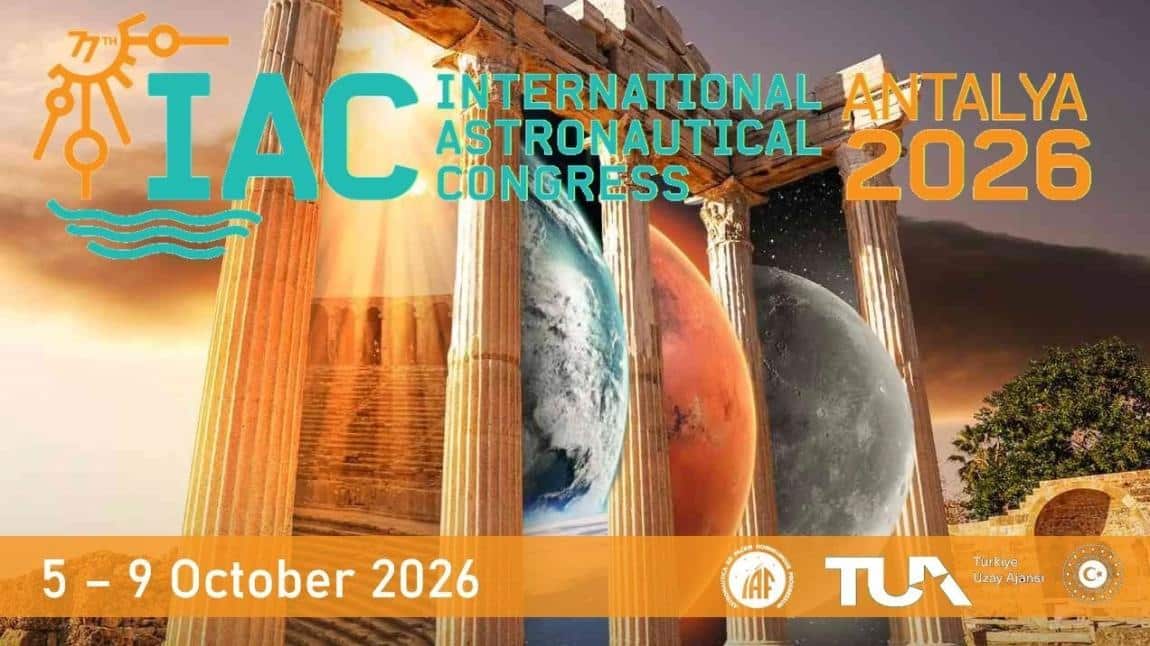
IACThe 77th International Astronautical Congress, Antalya
Final Proximity at
IAC 2026.
The congress comes to Türkiye this year, and we will be there in four capacities. Below the congress, what the company and its partners have been doing, newest first.
T minus 00:09:00 IAC 2026
Where to find us in Antalya
The International Astronautical Congress is the one week of the year when the whole sector is in one building. In 2026 that building is in Antalya, from 5 to 9 October, which makes this a home congress for a company with an office in İstanbul.
01
AttendingThe 77th IAC, Antalya, 5–9 October 2026
We will be at the congress for the full week.
If you want to talk about rendezvous guidance, proximity operations or autonomous lunar descent while everyone is in the same place, it is the cheapest meeting either of us will get all year. The congress is coordinated by the Ministry of Industry and Technology, hosted by the Turkish Space Agency and co-hosted by SAHA İstanbul.
IAF: https://www.iafastro.org/events/iac/
TUA: https://tua.gov.tr/tr/haberler/turkiye-iac-2026-antalya-tanitim-kampanyasini-baslatti
02
PresentingSeven papers in the programme, every one of them written with someone else
Seven accepted from fourteen submitted, and not one of the seven has Final Proximity alone on it. Each was written with people who brought the half of the problem we could not have answered ourselves — the vehicle, the propulsion, the test bench, the flight data — across the United Kingdom, Germany, Singapore and Türkiye: DLR, Nanyang Technological University, Cranfield University, İstanbul Technical University, Magdrive and TURKUZAYSAN.
Six are talks, spread across astrodynamics, space transportation, small satellites and business innovation; the seventh is an interactive presentation on lunar descent. Every one is listed below with its collaboration, day, time, hall and session.
Guidance for proximity operations is always written against somebody else’s vehicle, somebody else’s propulsion and somebody else’s test bench. A paper on this subject carrying a single affiliation usually means one of those three was assumed rather than measured, which is why the partner list is the substance here and not the courtesy.




03
Special SessionTowards a Metal-Based Circular Space Economy: Improving Safety and Sustainability in Earth Orbit to Enable Long-Term Human Expansion into Spaceaccepted
Tuesday 6 October 2026•Time: 11:35–12:45•Room: G3, Nest Convention Center•Format: Fishbowl
Read more
Organised by Magdrive, with Final Proximity as the local representative.
A significant portion of orbital debris originates from spacecraft and rocket structures composed of aluminium, titanium and other metals, presenting a potential resource base for circular approaches. This interactive fishbowl session explores how a metal-based circular space economy can improve safety and sustainability in Earth orbit while enabling a rapid start to the long-term expansion of human activity beyond Earth. Join the discussion to contribute your perspective and help shape this transition.
A fishbowl has no fixed panel: the chairs at the front are open, anyone may take one, and whoever is sitting there is the discussion. It is the right format for a question nobody has settled, and the wrong one to arrive at with nothing to say. Come with a position.
04
ExhibitingIn the local startup hall
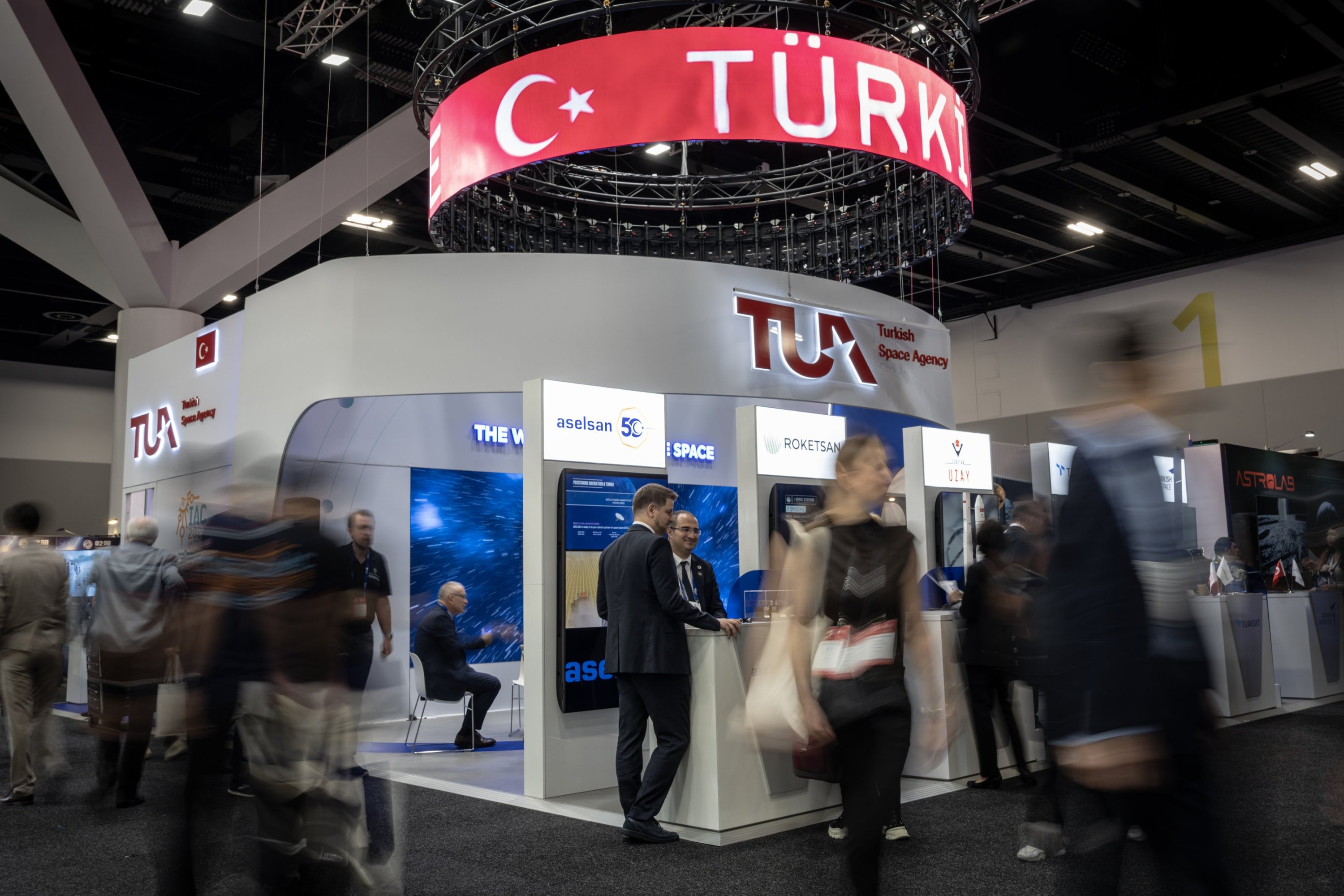
We will be exhibiting alongside the other Türkiye-based companies in the startup hall.
Come and see the guidance running rather than being described. That is the whole point of standing behind a table for a week.
TÜrkiye’s Antalya campaign, launched at IAC 2025: https://tua.gov.tr/tr/haberler/turkiye-iac-2026-antalya-tanitim-kampanyasini-baslatti
T minus 00:08:00 THE PAPERS
The papers, one by one
Seven accepted out of fourteen submitted. Six are talks and the seventh is an interactive presentation. Dates, rooms and session times are as published by the IAF; congress programmes move, so check the final schedule on the day.
6 Oct
from 15:00Reachability-Based Safe-Start Regions for Approach to a Tumbling Target with Rotating LOS Constraintsaccepted
Not every point near a tumbling target is a place an approach can safely begin from. Working backwards to the set of starting states from which a safe approach still exists, while the line of sight itself is rotating, turns a piloting judgement into something that can be checked before the burn.
6 Oct
16:45Sloshing Aware Tube MPC with Partial Tightening for Spacecraft Proximity Operationsaccepted
Propellant moving inside a part-full tank is a disturbance the controller cannot measure and cannot switch off, and it is worst in exactly the phase where the margins are smallest. Carrying the slosh inside the tube rather than treating it as noise to be absorbed afterwards is what makes the guarantee hold at close range.
7 Oct
12:20Horizon-Dependent Tube MPC for Elliptical-Orbit Rendezvous Under Mass Uncertaintyaccepted
A chaser burns propellant to close, so the mass it is controlling is not the mass it was sized against, and on an eccentric orbit the dynamics change along the approach as well. Letting the horizon respond to both is the difference between a tube that is honest and one that is merely conservative early and optimistic late.
8 Oct
from 10:15Software-Defined Earth Sensor for Precision Attitude Determination in CubeSatsaccepted
AI-Driven Landmark Recognition and FPGA-Accelerated Visual Navigation
An Earth sensor small enough for a CubeSat has usually meant giving up accuracy. Recognising landmarks instead of the horizon, and running the recognition on an FPGA rather than the flight processor, is an attempt to buy the accuracy back without buying mass.

8 Oct
from 15:00Space Postman and ATLAS: Enabling Startup Participation in the Orbital Logistics Economyaccepted
The one paper of the seven that is about the industry rather than the mathematics. Orbital logistics is being built by a small number of large organisations, and the question of how a company our size gets to take part in it is not a rhetorical one for us.
9 Oct
10:45Drift-Aware Multi-Target Space Tug Logistics Using Natural Orbital Precessionaccepted
A tug visiting several targets can either pay for every plane change or wait for the planes to come to it. Nodal precession is free and differential, so the cheapest tour is often not the shortest one, and the routing problem is really a question about how much time the operator is willing to trade for propellant.
IP
InteractiveFrom Vehicle Layout to Touchdown: Co-Design and Convex Guidance of a Lunar Soft Lander Under Propulsion Challengesaccepted
The seventh is an interactive presentation rather than a talk, and the only one of the seven you can stand in front of and argue with for as long as you like. It is the same argument as the RAST paper further down this page: the lander, the engine and the guidance are one problem, and sizing them separately is how landing missions are lost.



T minus 00:06:00 NEWS
Recent news
Newest first. Each item links to the primary source, written out in full, so the address can be read as well as followed.
10 Jun 2026
Lunar Working GroupThe 4th meeting of the Lunar Scientific Working Groupheld
The fourth meeting of the Lunar Scientific Working Group, part of the Turkish Lunar Mission and coordinated by TÜBİTAK UZAY, was held at Düzce University, bringing together academics, public institutions and industry.
The industry presentations ran the length of a landing. Mehmet Batuhan Kaya, Founder of PUURA Space, on propulsion systems; Emre Aklan, Founder of TURKUZAYSAN, on landing test vehicles; and Ömer Burak İskender, Founder of Final Proximity, on the guidance and control algorithms that decide whether a descent ends where it was aimed. The academic sessions covered lunar regolith, surface robotics and the CHERI project, space resources, lunar albedo measurement, and landing site selection.
Guidance and control is the last item in that list for a reason: the science decides where a mission should land and the geology decides whether it can, but neither matters until something can be flown to the chosen place and set down on it. A landing site selection methodology and a descent guidance algorithm are two halves of one problem.
TÜBİTAK UZAY: https://uzay.tubitak.gov.tr/en/turkish-lunar-mission-the-4th-meeting-of-the-lunar-scientific-working-group/
Video: https://www.instagram.com/tubitakuzay/reel/DZfTseUs5hk/
13–15 May 2026
Rast 2026Integrated Lander-Propulsion-GNC Framework for Autonomous Lunar Powered Descentpublished
Presented at IEEE RAST 2026, the International Conference on Recent Advances in Space Technologies, held in İstanbul from 13 to 15 May 2026. Final Proximity with TÜBİTAK UZAY, PUURA Space and TURKUZAYSAN.
The paper takes the lander, the engine and the guidance as one problem rather than three. The BUG vertical take-off and landing test vehicle is the reference platform and the YUNT V0 throttleable bipropellant engine provides the variable thrust; on top of them sits a successive convexification algorithm computing the descent in real time. Flown against realistic perturbations, the framework lands inside fifty metres.
Structure, propulsion and guidance are usually specified separately and integrated late, which is where landing missions are lost. Throttle authority, thrust-to-weight and the convergence of the guidance solver are the same constraint written three ways, and a framework that carries all three at once is the honest way to size a lander.
Paper: https://arxiv.org/abs/2604.23013
Video: https://www.instagram.com/reel/DX7KKu7DAQ6/
5–9 May 2026
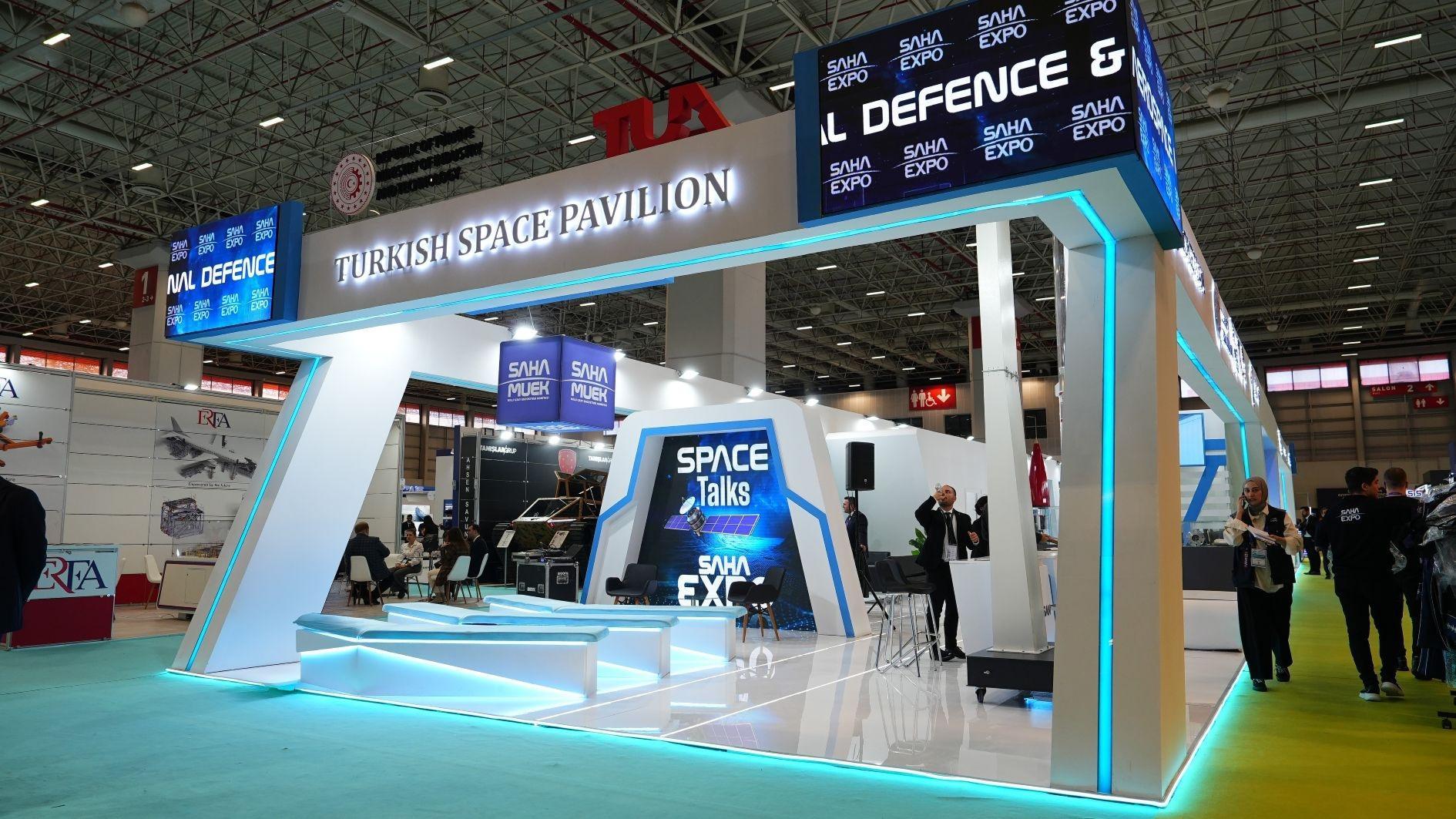
Space PavilionSAHA 2026, under the Turkish Space Pavilionexhibited
Final Proximity took part in SAHA 2026, the International Defence, Aerospace and Space Industry Exhibition, at the Istanbul Expo Centre from 5 to 9 May 2026, under the Turkish Space Pavilion hosted by the Turkish Space Agency (TUA).
It was the first SAHA to give space a pavilion of its own rather than a row of stands inside the defence halls, with a Space Dome and a Space Talks stage running through the week.
Being grouped under one pavilion rather than scattered through the halls is the difference between explaining what a company does and being found by someone already looking for it. The same argument applies to the startup hall in Antalya in October.
SAHA 2026: https://sahaexpo.com/en
T minus 00:00:05 READING
The longer pieces
The news above is what happened. Let’s Talk Space is the background behind it: fifteen written pieces on the history and engineering of spaceflight, including the lunar missions from 1959 to today and the test benches a lander is proved on before it flies.